Health and Safety Policy for Landscaping Bow
 Our landscaping Bow health and safety policy is built to protect employees, contractors, visitors, and the public while maintaining a high standard of service. Landscaping work can involve machinery, lifting, cutting tools, uneven ground, weather exposure, and contact with plants, soil, and chemicals. Because of these risks, every task must be planned with care and carried out with safe working practices at the centre of daily operations.
The purpose of this policy is to create a clear framework for managing hazards before work begins and monitoring safety throughout each project. It applies to all landscaping services in Bow, including garden maintenance, planting, turf care, site clearance, paving support, and soft landscaping tasks. Everyone involved is expected to understand their responsibilities and follow procedures that reduce the chance of injury, damage, or environmental harm.
Safety Responsibilities
Management is responsible for making sure the work environment is suitable, equipment is maintained, and staff receive the correct information for each assignment. Supervisors must assess the site, identify hazards, and ensure that safe systems of work are in place before work starts. Landscaping Bow safety relies on good communication, proper planning, and prompt action when a risk is noticed.
Risk Assessment and Planning
All jobs must begin with a suitable and sufficient risk assessment. This should consider ground conditions, access points, weather, overhead obstacles, buried services, water features, traffic, and public interaction. Where necessary, work should be adjusted to avoid danger. For example, wet surfaces may increase slip risk, while hot weather may require extra breaks, water, and shade. A careful Bow landscaping policy helps ensure that the task is matched to the conditions on site.
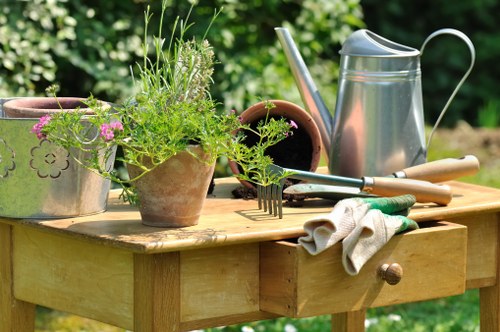 Before using machinery or tools, workers must confirm that the equipment is appropriate for the job and that guards, brakes, and controls are working correctly. Only trained and authorised individuals may operate powered tools, cutting equipment, or vehicles. Damaged tools should be removed from use immediately. This approach supports landscape safety in Bow by reducing the likelihood of avoidable incidents.
Manual handling must also be controlled. Heavy materials such as soil bags, paving slabs, plants, or waste containers should be moved using mechanical aids where possible. If lifting is unavoidable, workers should use proper posture, work in teams when needed, and avoid twisting or overreaching. Good handling techniques are a core part of safe landscaping practice.
Personal Protective Equipment and Safe Conduct
 Suitable personal protective equipment must be provided and worn when required. This may include gloves, safety boots, eye protection, hearing protection, high-visibility clothing, and weather-appropriate clothing. PPE does not replace other controls, but it offers an important final layer of protection. In landscaping Bow operations, PPE should be checked regularly and replaced when worn or damaged.
Work areas must be kept tidy to reduce trips, cuts, and collisions. Tools should be stored securely when not in use, and waste should be removed regularly to prevent clutter. Barriers, signs, or temporary controls may be needed to protect the public from moving equipment, falling debris, or restricted areas. A disciplined Bow landscaping safety routine helps maintain order throughout the site.
Hazardous substances, including fuels, fertilisers, herbicides, and cleaning products, must be stored and used according to the manufacturer’s instructions. Staff should know how to prevent spills, avoid skin contact, and manage disposal responsibly. When chemical products are used, ventilation, dilution, labelling, and segregation must be followed carefully. This protects both people and the environment while supporting a dependable landscaping health and safety policy.
Training, Welfare, and Emergency Procedures
Training is essential to maintaining safe standards. Workers must receive instruction on equipment use, hazard awareness, emergency response, manual handling, and any task-specific risks before starting work. Refresher training should be given when procedures change or when new equipment is introduced. A knowledgeable team is better able to uphold landscaping Bow health and safety across different job types.
Welfare arrangements should be suitable for the nature and duration of the work. Access to drinking water, rest breaks, handwashing facilities, and shelter from severe weather should be considered. Fatigue, dehydration, and exposure can affect judgement and increase the chance of accidents. Good welfare support is therefore an important part of safe Bow landscaping.
 Emergency procedures must be understood by everyone on site. First aid supplies should be available, and at least one trained first aider should be identified where practical. Workers must know how to report accidents, near misses, damage, and unsafe conditions without delay. Quick reporting helps prevent repeat incidents and supports continuous improvement in landscaping Bow safety management.
Monitoring and Review
Health and safety performance should be monitored through regular site checks, equipment inspections, and reviews of incidents or near misses. Findings must be used to improve procedures and strengthen controls where needed. If a method is no longer safe, it should be changed immediately. This ongoing review process keeps landscaping services in Bow aligned with current risks and working conditions.
All workers are expected to cooperate with this policy, follow instructions, and speak up if something appears unsafe. Safety is a shared responsibility, and good practice depends on consistent behaviour from everyone involved. A strong culture of care, attention, and accountability makes Bow landscaping operations safer and more reliable.
 This policy will be reviewed regularly to ensure it remains effective, practical, and suitable for the work being carried out. By maintaining clear standards, providing proper training, and controlling hazards at source, landscaping Bow services can be delivered responsibly, efficiently, and with respect for the wellbeing of all involved.